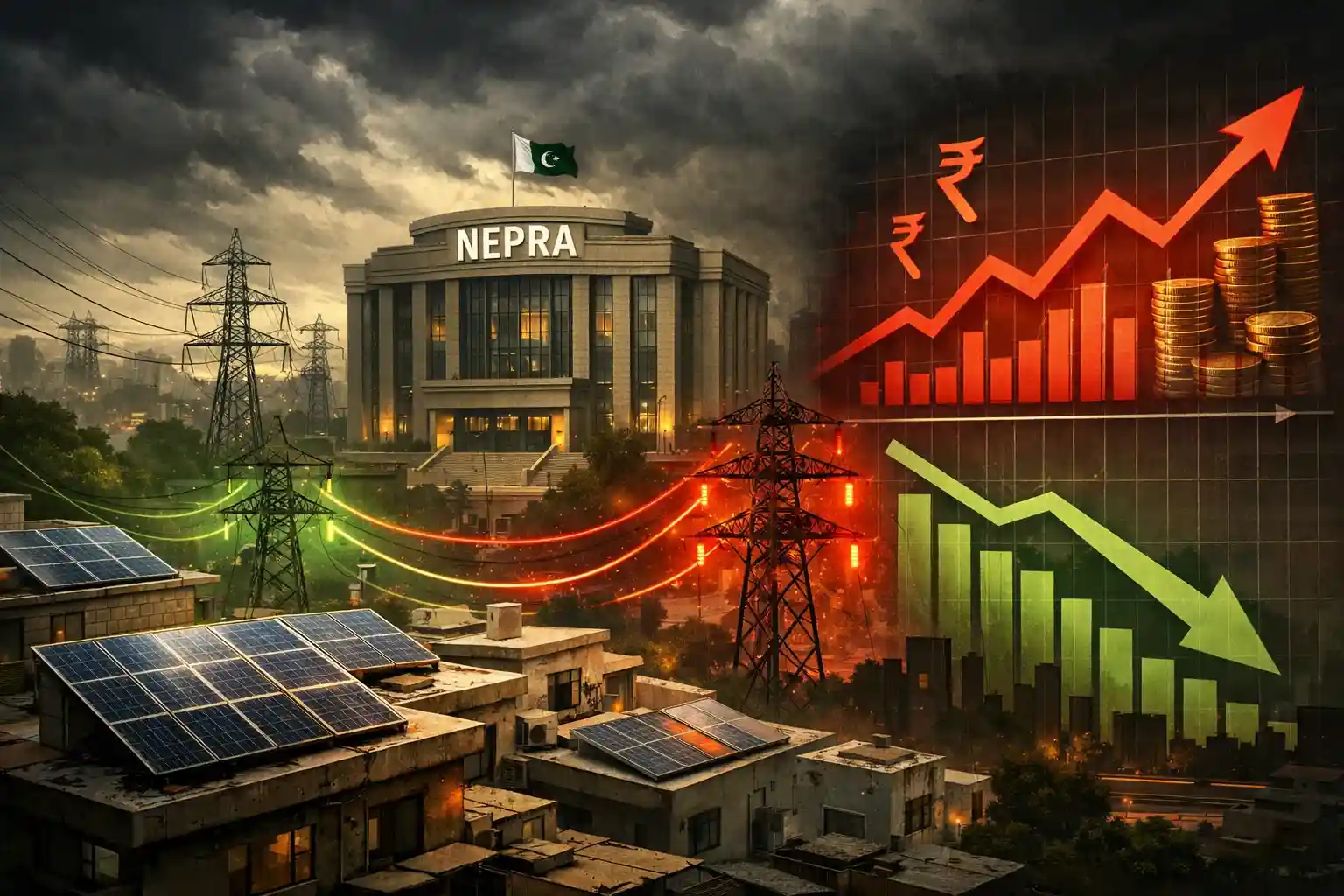
The landscape of renewable energy in Pakistan is undergoing a seismic shift. The National Electric Power Regulatory Authority (NEPRA) has officially notified the Net Metering Regulations 2026, a policy overhaul that fundamentally alters the financial dynamics for solar owners. This move marks the end of the traditional unit-for-unit adjustment system, effectively transitioning the country toward a net billing mechanism.
For years, rooftop solar owners enjoyed the benefit of offsetting their consumption directly against their generation. However, under the new NEPRA (Prosumer) Regulations 2026, solar users to pay full electricity unit price for power consumed from the grid, while their exported energy will be purchased at significantly lower rates.
The Shift from Net Metering to Net Billing
The most critical change in the 2026 regulations is the abolition of the one-to-one exchange model. Previously, if a consumer imported 100 units and exported 100 units, their net bill for energy was essentially zero. This unit-for-unit net metering system has been suspended.
تازہ ترین اپڈیٹس اور نوکریوں کی معلومات کے لیے ہمارا واٹس ایپ چینل فالو کریں:
چینل جوائن کریں(نوٹ: آپ کا نمبر کسی کو نظر نہیں آئے گا)
Under the new net billing framework:
- Imports: Consumers will be charged the full applicable retail tariff for every unit consumed from the grid. This rate can climb as high as Rs. 50 per unit depending on the slab and fuel adjustments.
- Exports: Surplus electricity generated by the consumer and sent to the grid will no longer offset the bill at the retail rate. Instead, it will be purchased by Discos at the National Average Energy Price.
Current market analysis suggests the buyback rate for solar net metering consumers, currently standing at Rs. 25.9 per unit, could see a drastic reduction to approximately Rs. 11 per unit. This creates a massive financial disparity, forcing consumers to pay the “net difference” in cash rather than units.
Financial Implications for Prosumers
The revised framework intends to align consumer-level power generation with the national grid’s financial realities, specifically regarding IPPs capacity payments. However, for the end-user, the economics of solar investment have changed.
Discos will now settle billing at the end of each 30-day billing cycle. Because the electricity exported to the national grid is valued at a fraction of the cost of electricity imported, the ROI (Return on Investment) periods for solar installations are expected to extend significantly.
تازہ ترین اپڈیٹس اور نوکریوں کی معلومات کے لیے ہمارا واٹس ایپ چینل فالو کریں:
چینل جوائن کریں(نوٹ: آپ کا نمبر کسی کو نظر نہیں آئے گا)
Furthermore, NEPRA has introduced a non-refundable concurrence fee of Rs 1,000 per kilowatt for new applicants. Additionally, all interconnection costs, including the installation of bidirectional meters or dual metering systems, remain the responsibility of the prosumer.
New Technical Constraints and Eligibility
The Prosumer Regulations 2026 have introduced stricter technical barriers to entry to ensure grid sustainability. The scope of eligible consumers includes residential, commercial, industrial, agricultural, and general services connected at 400V or 11kV.
Capacity Limits and Load Flow
- Maximum Capacity: The regulator has capped the size of a distributed generation facility at 1 MW.
- Transformer Load Cap: A crucial technical restriction states that no new connections will be allowed if generation on a specific transformer reaches 80% of its rated capacity.
- Mandatory Studies: Systems sized at 250kW or above must now undergo a mandatory load flow study to ensure grid stability before approval.
Changes to Contract Tenure and Renewals
The era of long-term security for distributed generation agreements has been curtailed. The standard net metering contract period has been reduced from seven years to just five years. Upon expiry, these contracts are eligible for renewal for an additional five years, but this is subject to mutual consent and regulatory compliance.
NEPRA retains special powers to revise purchase rates during the life of the agreement, issue binding directions, and demand operational data. This indicates a tighter regulatory grip over solar, wind, and biogas producers.
تازہ ترین اپڈیٹس اور نوکریوں کی معلومات کے لیے ہمارا واٹس ایپ چینل فالو کریں:
چینل جوائن کریں(نوٹ: آپ کا نمبر کسی کو نظر نہیں آئے گا)
Impact on Existing vs. New Consumers
A primary concern for current system owners is the validity of their agreements. The regulations clarify that the new policy will generally not apply to existing net metering consumers during the validity of their current contracts. However, there is a catch: Discos have been authorized to transition consumers to the new policy framework immediately upon contract expiry.
With the enforcement of the 2026 regulations, the Net Metering Regulations 2015 are automatically suspended. Future renewals and new applications will strictly fall under the net billing mechanism.
Inclusion of Biogas and Wind Energies
In a move to standardize the sector, NEPRA has expanded the definition of prosumers. Biogas-based prosumers and wind energy generators are now brought under the same regulatory structure as solar users. This unifies distributed generation under a single transparency mechanism, ensuring that all renewable sources up to 1 MW are treated equally regarding tariff structures and grid connectivity standards.
Summary of Key Regulatory Changes
- Billing Mode: Switched from Unit-Based Adjustment to Cost-Based Net Billing.
- Export Rate: Reduced to National Average Energy Price (Est. Rs. 11/unit).
- Import Rate: Charged at Full Retail Tariff (Up to Rs. 50/unit).
- Contract Term: Reduced to 5 Years (renewable).
- New Fees: Rs 1,000/kW concurrence fee introduced.
- Transformer Limit: Hard cap at 80% of transformer capacity.
This overhaul represents one of the most significant policy reversals in Pakistan’s energy sector, effectively shifting the financial burden of grid maintenance and capacity payments back onto the solar consumers who sought to escape rising energy costs.