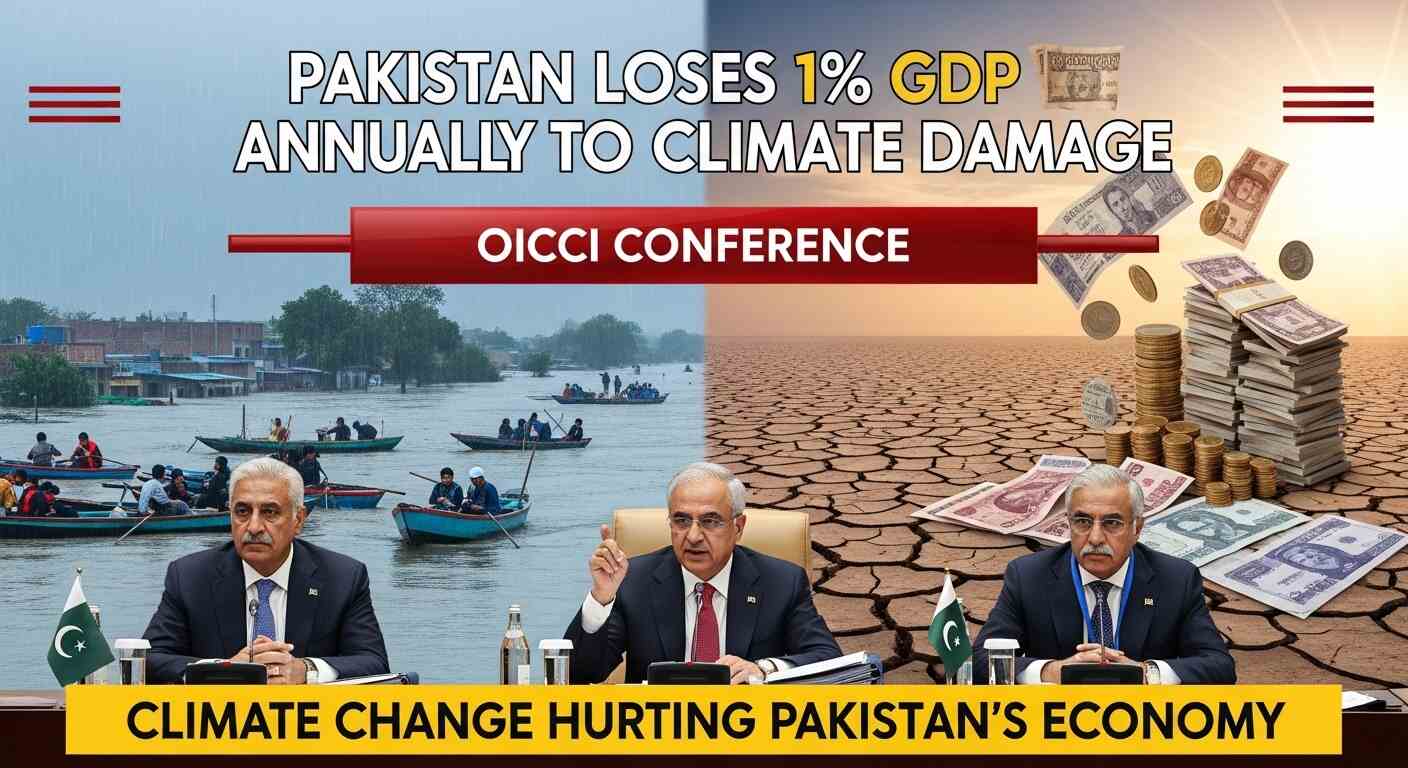
Pakistan climate change losses have reached an alarming level, quietly draining nearly one percent of GDP every year. Although Pakistan contributes less than one percent to global greenhouse gas emissions, it continues to face severe economic damage from climate-related disasters.
Experts now warn that climate change is no longer just an environmental issue—it has become a serious economic emergency for the country.
Why Pakistan Is Paying a High Economic Price
According to climate experts, extreme weather events are becoming more frequent and intense. These include:
تازہ ترین اپڈیٹس اور نوکریوں کی معلومات کے لیے ہمارا واٹس ایپ چینل فالو کریں:
چینل جوائن کریں(نوٹ: آپ کا نمبر کسی کو نظر نہیں آئے گا)
- Repeated floods destroying homes and roads
- Record-breaking heatwaves affecting health and productivity
- Rapid glacier melt threatening water security
- Large-scale agriculture losses and job disruption
Together, these factors are accelerating economic losses and weakening long-term growth.
Climate Crisis Highlighted at National Level
These concerns were a key focus at the 4th Pakistan Climate Conference, organised by the Overseas Investors Chamber of Commerce and Industry (OICCI). The event brought together policymakers, climate experts, and business leaders.
The consensus was clear: Pakistan climate change losses now represent an existential threat to economic stability.
Pakistan on the Frontline of Global Climate Risk
Federal Minister for Climate Change and Environmental Coordination, Dr Musadik Masood Malik, stated that Pakistan stands on the frontline of the global climate crisis. He emphasized that building climate resilience must be treated as an economic necessity, not just corporate responsibility.
تازہ ترین اپڈیٹس اور نوکریوں کی معلومات کے لیے ہمارا واٹس ایپ چینل فالو کریں:
چینل جوائن کریں(نوٹ: آپ کا نمبر کسی کو نظر نہیں آئے گا)
Emission Targets and Investment Needs
Pakistan has updated its climate commitments under NDC 3.0, aiming for a 50 percent emission reduction by 2035. However, achieving this goal will require around $565.7 billion in investment.
Experts stress that effective climate finance must include:
- Long-term international funding
- Fair risk-sharing models
- Support for developing economies
Without this, Pakistan climate change losses will continue to rise.
From Policy to Practical Action
Finance Minister Senator Muhammad Aurangzeb highlighted that Pakistan already has strong climate frameworks in place. The real challenge is converting policies into bankable projects and investable projects.
تازہ ترین اپڈیٹس اور نوکریوں کی معلومات کے لیے ہمارا واٹس ایپ چینل فالو کریں:
چینل جوائن کریں(نوٹ: آپ کا نمبر کسی کو نظر نہیں آئے گا)
Here, the private sector plays a vital role by providing:
- Capital investment
- Innovation
- Technical expertise
Why Funding Exists but Impact Is Limited
According to Chongguang Yu (Charles) from the United Nations Development Programme (UNDP), global climate funding is available. The problem lies in fragmented systems that block efficient investment.
Proposed solutions include:
- Blended finance models
- Green bonds
- Strong risk-sharing mechanisms
These tools can unlock private capital and reduce Pakistan climate change losses more effectively.
Positive Signs in Sustainable Finance
OICCI President Yousaf Hussain highlighted encouraging progress, such as growing interest in sustainable finance and climate-focused investment strategies. These efforts show Pakistan’s increasing commitment to climate resilience financing.
Technology and the Future Economy
Senior Vice President OICCI Jason Avanceña noted that real solutions lie in implementation. Key focus areas include:
- Renewable energy expansion
- National energy transition
- AI-based climate forecasting
- Power grid upgrades
- Public-private partnerships
If executed properly, these initiatives can significantly lower Pakistan climate change losses.
Conclusion
Pakistan climate change losses are no longer a future risk—they are a present economic reality. Climate damage is reshaping national development, investment priorities, and economic planning.
The message from experts is clear: without urgent, coordinated action from government, private investors, and global partners, climate change will continue to drain Pakistan’s economy. Turning commitments into real, measurable action is the only path forward.