Complete Risk Awareness, Preparedness & Response Guide
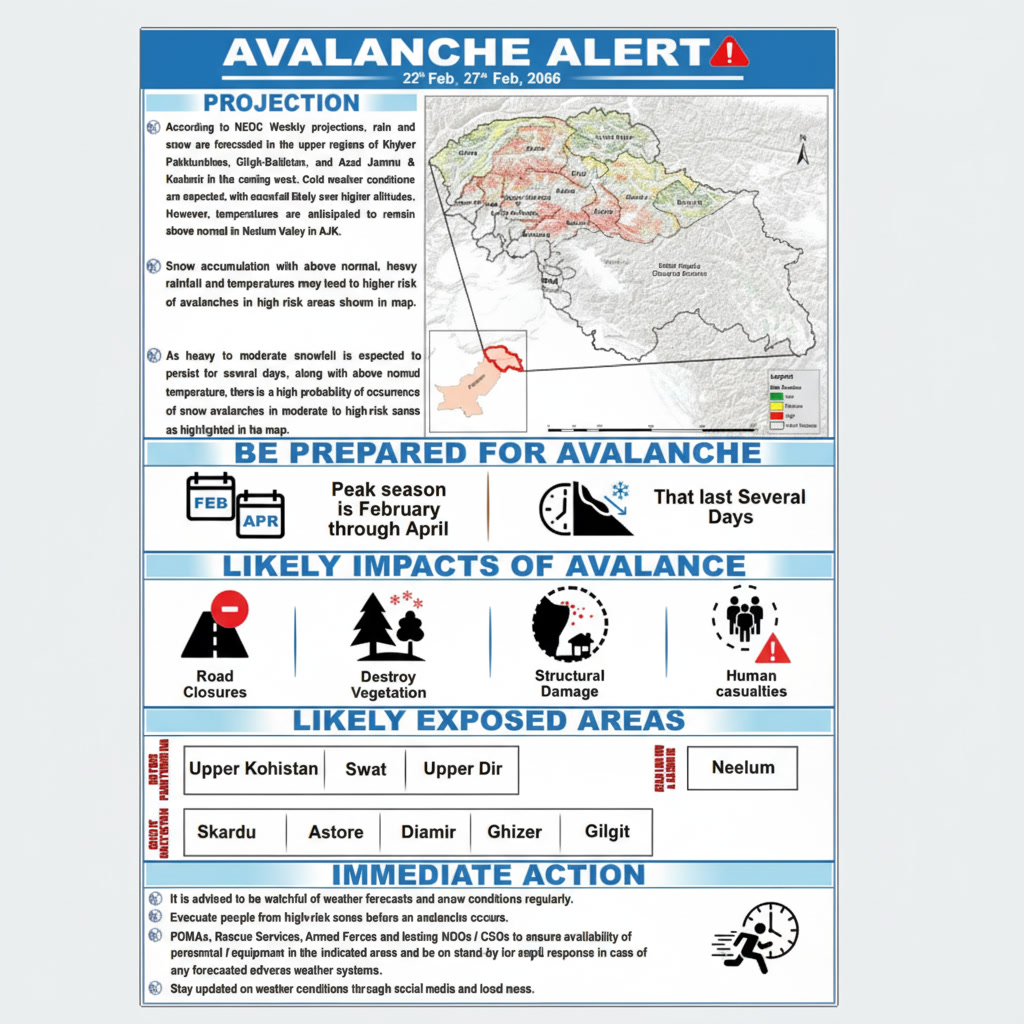
An avalanche is a rapid flow of snow, ice, and debris down a mountain slope. Avalanches are among the most dangerous winter hazards in mountainous regions and can cause severe damage to infrastructure, transportation routes, and human life.
Avalanches commonly occur during peak winter months — December through March — particularly in high-altitude mountainous regions. In Pakistan, the Northern Areas within the Hindukush–Karakoram–Himalayan (HKH) ranges are especially vulnerable due to steep slopes and heavy snowfall.
In many avalanche incidents worldwide, snow slides are triggered by people traveling on unstable slopes, especially after fresh snowfall or sudden temperature changes.
تازہ ترین اپڈیٹس اور نوکریوں کی معلومات کے لیے ہمارا واٹس ایپ چینل فالو کریں:
چینل جوائن کریں(نوٹ: آپ کا نمبر کسی کو نظر نہیں آئے گا)
How to Stay Safe
Preparedness and awareness significantly reduce avalanche risk.
Before Traveling
- Check the latest weather forecast and snowfall updates.
- Ask local communities about avalanche-prone areas.
- Learn how to use avalanche rescue equipment.
- Take first aid training for hypothermia and frostbite.
- Travel with an experienced guide.
- Always travel in pairs.
- Carry a helmet, torch, and avalanche airbag.
During Avalanche Risk Conditions
تازہ ترین اپڈیٹس اور نوکریوں کی معلومات کے لیے ہمارا واٹس ایپ چینل فالو کریں:
چینل جوائن کریں(نوٹ: آپ کا نمبر کسی کو نظر نہیں آئے گا)
- Avoid steep, snow-covered slopes.
- Follow official warnings on roads and mountain paths.
- Refrain from unnecessary travel after heavy snowfall.
- Call Rescue 1122 before initiating any search effort.
If Caught in an Avalanche
- Move diagonally to the side, not straight downhill.
- Try to grab onto a tree or rock to anchor yourself.
- “Swim” using arm and leg motions to stay near the surface.
- Cup your hands over your mouth to create an air pocket if buried.
- Signal for help by shouting or making noise.
Possible Injuries from Avalanches
| Injury Type | Description |
| Hypothermia | Dangerous drop in body temperature |
| Suffocation | Burial under snow |
| Trauma Injuries | Physical impact injuries |
| Frostbite | Freezing of skin and tissues |
| Cardiac Arrest | Severe stress or oxygen deprivation |
Avalanche Warning Signs
Although avalanches are sudden, warning signs often appear beforehand:
تازہ ترین اپڈیٹس اور نوکریوں کی معلومات کے لیے ہمارا واٹس ایپ چینل فالو کریں:
چینل جوائن کریں(نوٹ: آپ کا نمبر کسی کو نظر نہیں آئے گا)
- Cracks forming in snow cover
- Rapid temperature increase above 0°C
- Dramatic weather changes
- Fresh snowfall combined with strong winds
- Snow accumulation on rocks and open slopes
- Slight snow movement sounds
Speed and Season
| Metric | Value |
| Typical Avalanche Speed | 90–120 km/h |
| Powder Avalanche Speed | Up to 300 km/h |
| Peak Season | December – March |
Avalanche Resources
Emergency Contacts in Pakistan:
| Agency | Contact Number |
| GBDMA | 05811 922 030 |
| SDMA | 05822 921 536 |
| PDMA KP | 1700 |
| Rescue 1122 | 1122 |
Citizens are encouraged to follow official disaster advisories and use emergency helplines during extreme weather conditions.
Avalanche
Scientific Definition, Classification & Hazard Overview
An avalanche is defined as a sudden mass of snow and ice falling down a mountain slope, often carrying rocks and debris along with it.
Avalanches are categorized under meteorological and hydrological hazards and are considered terrestrial hazards due to their occurrence on mountainous terrain.
Types of Avalanches
| Type | Characteristics | Slope Angle | Speed |
| Loose Snow | Starts at a single point | ~40° | Moderate |
| Slab Avalanche | Large snow layer releases | >30° | 50–100 km/h |
| Gliding Avalanche | Entire snowpack slides | ≥15° | Variable |
| Powder Avalanche | Massive airborne snow cloud | Steep slopes | Up to 300 km/h |
| Wet Snow | Triggered by warming or rain | Variable | Heavy & destructive |
Drivers
تازہ ترین اپڈیٹس اور نوکریوں کی معلومات کے لیے ہمارا واٹس ایپ چینل فالو کریں:
چینل جوائن کریں(نوٹ: آپ کا نمبر کسی کو نظر نہیں آئے گا)
Avalanche danger increases due to:
- Fresh snowfall
- Wind deposition
- Rapid warming above freezing
- Steep terrain
- Weak snow layering
- Shaded slopes
Impacts
Avalanches may result in:
- Damage to buildings and infrastructure
- Road and railway blockages
- Disruption of power and communication lines
- Loss of life and injuries
- Economic losses in tourism regions
- Agricultural damage due to cold waves and frost
Multi-Hazard Context
تازہ ترین اپڈیٹس اور نوکریوں کی معلومات کے لیے ہمارا واٹس ایپ چینل فالو کریں:
چینل جوائن کریں(نوٹ: آپ کا نمبر کسی کو نظر نہیں آئے گا)
Avalanches often interact with:
- Snowstorms
- Cold waves
- Landslides
- Flooding after snowmelt
- Debris flows
Multi-Hazard Diagram
Avalanche risk is influenced by interconnected weather systems, terrain conditions, and temperature fluctuations. These factors combine to increase instability in snow-covered mountainous regions.
Risk Management
Effective mitigation measures include:
- Early warning systems
- Controlled avalanche triggering (explosives or artillery)
- Avalanche dams and snow fences
- Snow sheds protecting transport routes
- Reinforced building structures
- Zoning regulations in high-risk areas
- Public awareness campaigns
- Professional training programs
Some avalanche dams may exceed 20 meters in height to prevent large-scale snow movement.
Monitoring
Avalanches are monitored using:
- Weather stations
- Snowpack sensors
- Satellite monitoring
- Automated snow measurement systems
- Field observations
- Predictive risk models
Monitoring supports national early warning systems and emergency preparedness planning.
PR No. 209 – Heightened Avalanche Risk Warning
Islamabad: January 23, 2026
The National Disaster Management Authority (NDMA) issued an advisory highlighting increased avalanche risk from 23 to 29 January 2026 following moderate to heavy snowfall.
Affected Regions
- Gilgit-Baltistan
- Azad Jammu & Kashmir
- Northern Khyber Pakhtunkhwa
- Northern Balochistan
Key Concerns
- Fresh snow accumulation
- Very cold post-snowfall temperatures
- Road closures on high mountain passes
- Dense fog affecting transport in Punjab and upper Sindh
- Frost damage to crops
Authorities advised avoiding unnecessary high-altitude travel and maintaining coordination with local administrations.
References
This article is based on publicly available safety advisories, disaster management frameworks, and winter weather hazard documentation.
Cite This
Avalanche Safety & Risk Management Guide (2026). Published by lesmeilleurs.pk.
Is This Page Useful?