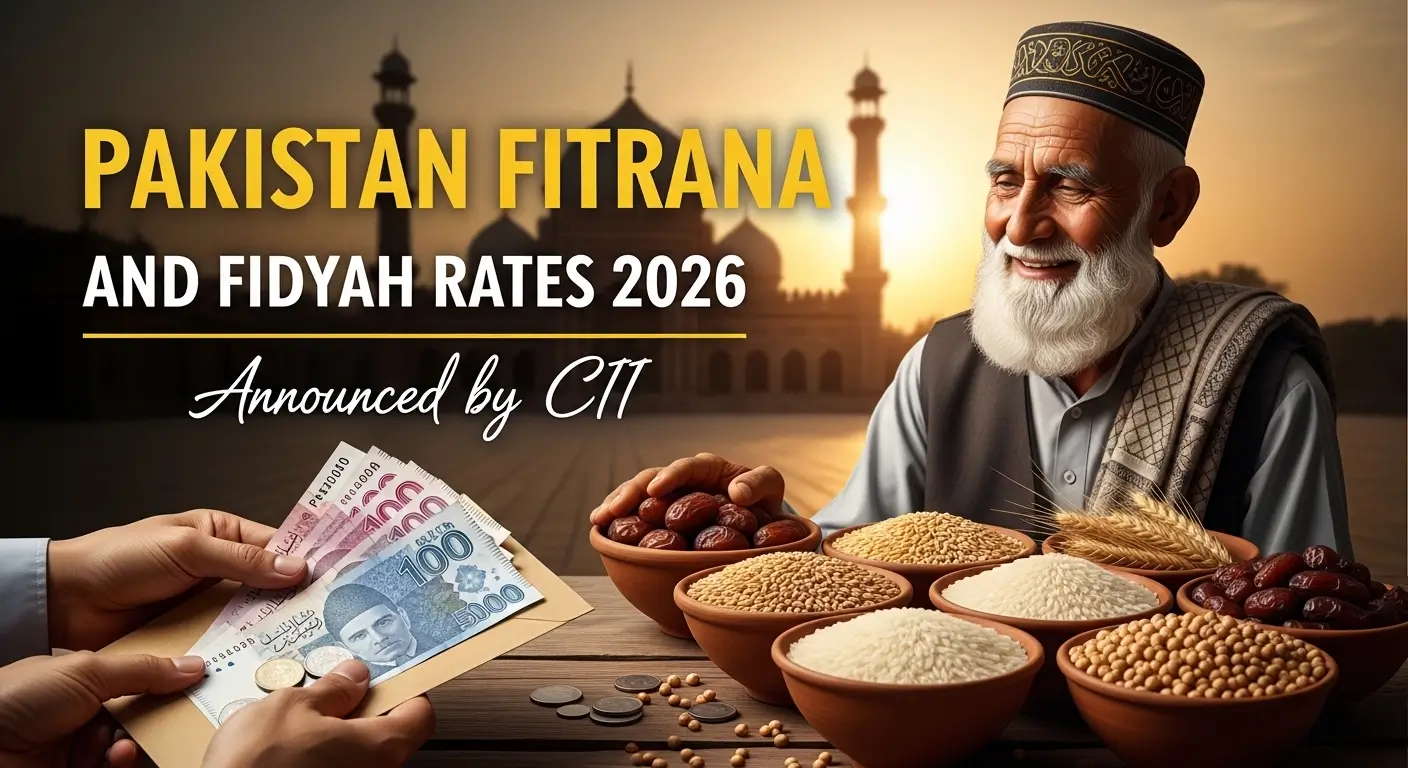
The Pakistan Fitrana and Fidyah Rates 2026 have been officially announced by the Council of Islamic Ideology (CII) ahead of Ramadan 2026. These rates help Muslims in Pakistan fulfill their Islamic obligation correctly, ensuring fairness and support for those in need.
Fitrana (Sadaqatul-Fitr) and Fidyah are essential forms of charity closely connected with fasting and social responsibility in Islam.
CII Official Announcement for Ramadan 2026
The CII, Pakistan’s constitutional religious advisory body, issued the official rates based on market prices of staple food items.
The announcement was confirmed by Chairperson CII Allama Dr. Muhammad Raghib Hussain Naeemi, who stated that calculations follow Islamic principles and affordability.
تازہ ترین اپڈیٹس اور نوکریوں کی معلومات کے لیے ہمارا واٹس ایپ چینل فالو کریں:
چینل جوائن کریں(نوٹ: آپ کا نمبر کسی کو نظر نہیں آئے گا)
The goal is to maintain balance between religious duty and economic reality.
Minimum Fitrana and Fidyah Rates 2026
The minimum payment has been calculated using wheat flour, as it is the most commonly consumed food.
Minimum Rates Per Person
- Wheat flour: Rs. 300
- Government-subsidized wheat flour: Rs. 200
These amounts represent the lowest acceptable threshold. Those with greater financial capacity are encouraged to give more.
تازہ ترین اپڈیٹس اور نوکریوں کی معلومات کے لیے ہمارا واٹس ایپ چینل فالو کریں:
چینل جوائن کریں(نوٹ: آپ کا نمبر کسی کو نظر نہیں آئے گا)
Per Person Fitrana and Fidyah Rates (Food-Based)
The Pakistan Fitrana and Fidyah Rates 2026 vary based on food quality:
- Wheat flour: Rs. 300
- Barley: Rs. 1,100
- Dates: Rs. 1,600
- Raisins: Rs. 3,800
- Munqa: Rs. 5,400
Islam allows flexibility so individuals can contribute according to their living standards.
Who Must Pay Fitrana
Fitrana is obligatory on every Muslim, regardless of:
- Age
- Gender
- Employment status
Parents responsibility includes paying Fitrana on behalf of their children. Fitrana must be paid before Eid-ul-Fitr to ensure the needy can celebrate with dignity.
تازہ ترین اپڈیٹس اور نوکریوں کی معلومات کے لیے ہمارا واٹس ایپ چینل فالو کریں:
چینل جوائن کریں(نوٹ: آپ کا نمبر کسی کو نظر نہیں آئے گا)
Why Paying More Than the Minimum Is Encouraged
Islam strongly promotes charity, social justice, and compassion. Paying more than the minimum:
- Improves food quality for the poor
- Shows gratitude to Allah
- Strengthens community unity
Generosity reflects the true Ramadan spirit.
Provincial Differences in Rates
The CII clarified that individuals should consider local market rates if they live outside Punjab. Prices may vary in:
- Sindh
- Khyber Pakhtunkhwa
- Balochistan
- Gilgit-Baltistan
This ensures fairness across regions.
Fidyah for Missed Fasts (30 Days)
Fidyah applies to people with permanent inability to fast, such as the elderly people or those with chronic illness.
Fidyah for 30 Missed Fasts
- Wheat: Rs. 9,000
- Barley: Rs. 33,000
- Dates: Rs. 48,000
- Raisins: Rs. 114,000
- Munqa: Rs. 162,000
- Government wheat flour: Rs. 6,000
Each amount equals feeding one needy person per fast.
Difference Between Fitrana and Fidyah
Fitrana
- Paid once per person
- Obligatory on all Muslims
- Linked to Ramadan completion
Fidyah
- Paid for missed fasts
- Applies to permanent inability
- Calculated per fast
Understanding this difference prevents religious errors.
تازہ ترین اپڈیٹس اور نوکریوں کی معلومات کے لیے ہمارا واٹس ایپ چینل فالو کریں:
چینل جوائن کریں(نوٹ: آپ کا نمبر کسی کو نظر نہیں آئے گا)
Kaffarah for Intentionally Breaking a Fast
If a fast is broken deliberately, Kaffarah applies.
Kaffarah Options
- Fast 60 consecutive fasts, or
- Feed 60 needy people two meals each
Kaffarah is stricter than Fidyah, highlighting the seriousness of intentional violations.
Final Thoughts
The Pakistan Fitrana and Fidyah Rates 2026 Announced by CII offer clear guidance for Muslims preparing for Ramadan. Paying on time and according to ability ensures spiritual fulfillment and strengthens social welfare.
تازہ ترین اپڈیٹس اور نوکریوں کی معلومات کے لیے ہمارا واٹس ایپ چینل فالو کریں:
چینل جوائن کریں(نوٹ: آپ کا نمبر کسی کو نظر نہیں آئے گا)
By following these rates, Muslims uphold compassion, unity, and responsibility—the true values of Ramadan.